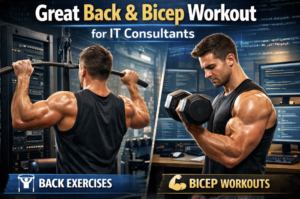
IT consulting is mentally demanding work. You spend long stretches at a desk, jump between tickets and meetings, troubleshoot under pressure, and carry a lot of responsibility in your head before the day is even halfway done. A strong back and solid biceps routine is a smart fit for that lifestyle because it helps build posture support, grip strength, and upper-body endurance while giving your brain a reset from screen fatigue.
This workout is built for real working people, not fitness influencers with unlimited time. It is designed to be effective, simple to follow, and strong enough to help you feel better in your body while you keep showing up at a high level in your career. It also pairs well with the kind of daily routine many IT consultants already have: focused blocks, efficient systems, and measurable progress.
Staying sharp in tech means taking care of your body too, and it helps to stay connected to what is happening in the industry while you build healthier habits. Good sources to keep in your rotation include Reuters Technology, TechCrunch, Ars Technica, The Verge Tech, CIO, WIRED, and even the broader background on Information Technology on Wikipedia. These are all strong places to stay informed while you upgrade both your skills and your health.
Why Back and Biceps Training Works So Well for IT Consultants
A lot of IT work pulls your body into the same positions every day. You lean forward, shoulders round in, neck tightens up, and your arms stay in front of you while typing, clicking, and handling devices. Back training helps fight that pattern by strengthening the muscles that pull your shoulders back and support better posture. Biceps work complements it by building arm strength that helps with carrying equipment, moving gear, and improving overall pulling strength.
This is not just about looks. It is about feeling less stiff at the end of the day, having more energy, and reducing that drained feeling that comes from sitting too long. A strong upper back can help you feel more open and upright during client calls and presentations, and stronger arms make everyday tasks easier. That confidence carries over into your work in a real way. 😎
What You Need Before You Start
You can do this workout in a gym or in a home setup with dumbbells and a resistance band. A cable machine helps, but it is not required. The goal is consistency, not perfect equipment.
Before each session, give yourself 5 to 8 minutes to warm up. Do arm circles, band pull-aparts, light rowing movements, and a few bodyweight hinges. Add a short walk if you have been sitting most of the day. This gets your shoulders and upper back ready to work and helps you move better from the first set.
Use a weight that feels challenging but controlled. You want clean reps, not swinging or jerking. If your form breaks down, the weight is too heavy for that set.
The Back and Biceps Workout Structure
This routine is built around compound pulling first, then focused back work, then biceps finishers. Rest about 60 to 90 seconds between most sets. For heavier rows, rest up to 2 minutes.
Train this workout 1 to 2 times per week depending on your schedule. If you are doing it once weekly, go all in with focus and intensity. If you do it twice, keep one day slightly lighter.
1) Dumbbell or Barbell Row – 4 sets of 8 to 10 reps
This is your foundation move. Rows build thickness through the mid-back and train the muscles that help pull your shoulders into a stronger position. Keep your chest stable, hinge at the hips, and pull with control.
Think about driving your elbows back instead of yanking the weight with your hands. Pause for a second at the top of each rep if you can. That little squeeze makes a big difference.
2) Lat Pulldown or Assisted Pull-Up – 4 sets of 8 to 12 reps
This movement targets the lats, the big muscles on the sides of your back that create width and support stronger posture. If you sit a lot, this is a great move to help rebalance your upper body.
Pull the bar down toward the upper chest and keep your shoulders away from your ears. If you are doing assisted pull-ups, use a band or machine and focus on smooth movement over speed.
3) Seated Cable Row or Resistance Band Row – 3 sets of 10 to 12 reps
This is excellent for control and posture. It reinforces good shoulder positioning and lets you work the back muscles without a ton of strain on the lower body.
Sit tall, brace your core, and pull the handle toward your ribs. Avoid shrugging. Slow reps here can really wake up the upper and mid-back, especially after a day of laptop work.
4) Single-Arm Dumbbell Row – 3 sets of 10 reps per side
Single-arm work helps fix strength imbalances, which are common if you spend a lot of time mousing with one hand or carrying bags on one side. It also helps you focus on form and feel.
Use a bench or sturdy surface for support. Keep your torso stable and let your elbow track close to your body. Do not twist to cheat the rep. Clean movement wins.
5) Face Pulls or Band Pull-Aparts – 3 sets of 12 to 15 reps
This is one of the best posture-support movements you can add. It hits the rear shoulders and upper back muscles that often get neglected. It is also very shoulder-friendly when done correctly.
Pull toward your face with elbows high, then squeeze your shoulder blades together. If you only have a band, pull it apart at chest or face height with control. This movement is gold for desk workers. ✅
6) Standing Dumbbell Curl – 3 sets of 10 to 12 reps
Now you move into direct biceps work. Keep your elbows close to your sides and avoid swinging. The goal is controlled tension, not momentum.
Raise the dumbbells smoothly and lower them slowly. The lowering phase matters just as much as the lift. If your shoulders take over, lower the weight and reset.
7) Hammer Curl – 3 sets of 10 to 12 reps
Hammer curls build the biceps and forearms, which is great for grip strength and everyday carry strength. This one is especially useful for IT consultants who move laptops, monitors, or cabling from site to site.
Hold the dumbbells with palms facing inward and curl with control. Stay tall and keep your core engaged.
8) Incline Dumbbell Curl or Cable Curl – 2 to 3 sets of 12 reps
This is your finisher. The goal is to fully fatigue the biceps with good form and a strong stretch. If you use an incline bench, let your arms hang naturally and keep the movement smooth.
If you are using cables, keep tension steady from start to finish. You do not need to go heavy here. Burn and control are the focus. 🔥
How to Fit This Into a Busy IT Schedule
The best workout is the one you actually complete. If your calendar gets packed, run the first 5 exercises and leave biceps for the next session. If time is tight, shorten rest times and stay moving. You can also break it into two parts: back at lunch, biceps after work.
A strong option for many IT consultants is training right after the workday ends before the evening gets away from you. Another option is an early morning session on client-call-light days. Pick a time that matches your actual life and protect it like a project deadline.
It also helps to stack the habit. Finish your workout, then spend 10 minutes checking one trusted IT news source while you cool down or stretch. That way you are building your body and your market awareness in the same routine. 📈
Form, Recovery, and Progress Tips That Matter
Progress happens when your body can recover. Aim for enough sleep, drink water consistently, and eat enough protein to support muscle repair. You do not need a perfect meal plan to benefit from this workout, but you do need consistency.
Track your lifts in a notes app or spreadsheet. Write down the weight, reps, and how it felt. IT consultants already think in systems, and training responds really well to that mindset. If you add one rep, improve control, or increase weight slightly over time, that is progress.
Pay attention to posture during the workday too. Stand up every hour, take short walks, and reset your shoulders. These small habits make the workout more effective because your body is not fighting the same stress pattern all day long.
If you ever feel sharp pain, stop and adjust. Muscle fatigue is normal. Joint pain is not. Choose movements that feel strong and stable, and modify when needed.
A Practical Weekly Example
A simple weekly setup might look like this: back and biceps on Monday or Tuesday, lower body later in the week, and a shorter full-body or cardio session on the weekend. That gives your upper body time to recover while keeping you active.
If your week is chaotic, one quality back and biceps session still delivers value. This routine is not about perfection. It is about building strength that supports your career, your energy, and your long-term health.
Conclusion
A great back and biceps workout is a powerful fit for IT consultants because it strengthens the muscles that support posture, reduces desk-body stiffness, and builds the kind of upper-body strength that makes both work and life feel easier. This routine is efficient, repeatable, and built for people with real schedules.
Keep it simple, stay consistent, and treat your fitness the same way you treat a strong IT environment: steady maintenance, smart upgrades, and long-term thinking. Your body will thank you for it, and your workday will feel better because of it. 💪💻