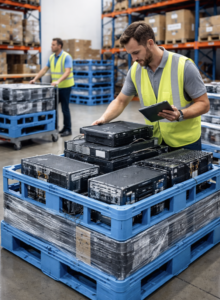
IT inventory is not just a purchasing issue, and it is not just a software issue either. It is an operational discipline that touches receiving, storage, device staging, deployment, asset protection, shipping, returns, and long-term lifecycle control. IBM’s explanation of IT asset management describes ITAM as end-to-end tracking and management across the full lifecycle of IT assets, while Wikipedia’s overview of asset management frames asset management as a systematic process centered on cost, risk, and performance. When you look at IT inventory through that lens, the way equipment is physically stored and moved becomes part of the larger strategy instead of an afterthought.
For IT companies, managed service providers, internal enterprise IT departments, device refurbishers, and hardware distributors, physical organization has a direct effect on operational reliability. If servers, monitors, switches, laptops, spare parts, and boxed accessories are stacked on the wrong base, the entire chain becomes more fragile. Labels get harder to read, equipment is harder to scan, storage footprints get messy, and shipments become less predictable. That is exactly why tailored material-handling solutions deserve more attention on IT websites and in IT operations conversations.
IT Inventory Works Best When the Physical Layer Matches the Digital Layer
A strong inventory system depends on knowing what you have, where it is, what condition it is in, and how quickly it can be found or moved. NIST’s IT Asset Management guidance explains that practical, standards-based approaches to asset management help organizations track assets across the enterprise, and NIST’s asset inventory guidance stresses that inventorying hardware, software, and sensitive assets helps organizations identify risk, reduce inefficiencies, and stay current on updates and upgrades. When the digital record says one thing and the warehouse floor says another, inventory discipline starts breaking down.
That is where Custom Pallets can make a real difference for IT inventory, storage, and logistics. Greystone describes custom plastic pallets as tailored solutions for unique material-handling needs, including specialized loads, unusual dimensions, specific weight requirements, and compatibility with automation or specialized equipment. For IT environments, that kind of fit matters because technology inventory is rarely one-size-fits-all. A shipment of rack servers does not behave like a load of monitors, and boxed networking gear does not stack like replacement laptops or telecom components.
Plastic Pallets Bring Repeatability to Sensitive IT Storage
In IT operations, repeatability is valuable. Teams want shelves that load the same way, pallets that fit racking the same way, and shipments that arrive with fewer surprises. Greystone notes that plastic custom pallets are designed for consistent performance, uniform dimensions, and compatibility with racking or automated systems. That consistency is especially useful for IT inventory because scanners, labels, barcodes, and serialized asset workflows depend on equipment being staged and positioned in a predictable manner. When the platform underneath the inventory is more consistent, the entire storage process becomes cleaner and easier to manage.
Plastic also makes practical sense in environments where cleanliness and contamination control matter. Greystone highlights resistance to moisture, pests, and contamination as advantages of plastic custom pallets, along with hygienic and sanitary benefits that help support cleaner operations. In an IT setting, cleaner storage is not just cosmetic. Dust, moisture exposure, and dirty staging areas can complicate handling, packaging, returns, and resale value. A cleaner pallet program supports a cleaner inventory environment, and that supports better asset condition and more professional outbound fulfillment.
Better Storage Decisions Support Better Security and Compliance
Asset control is also a security issue. CISA’s guidance on known exploited vulnerabilities recommends maintaining updated asset inventory information so organizations can determine which software and hardware products are affected by risk. In other words, if you do not have a trustworthy view of your hardware base, you are already behind. Physical disorder can make that problem worse by slowing down audits, delaying device identification, and creating confusion between active stock, retired stock, and equipment waiting for deployment or disposal.
Custom plastic pallets help reduce that confusion by making inventory zones easier to define and easier to keep disciplined over time. A pallet size or configuration designed around specific SKUs, device classes, carton footprints, or staging workflows can help separate inbound equipment from ready-to-deploy equipment, quarantine stock from cleared stock, and return merchandise from saleable inventory. That does not replace good software, good labeling, or good governance, but it supports them. In practical terms, it gives IT teams a physical system that is more aligned with the logic of their asset records.
Modern IT Logistics Are Growing More Demanding
This matters even more now because the volume and strategic importance of technology infrastructure keep rising. Reuters’ report on record U.S. data center buildout said construction spending on U.S. data centers reached an all-time high annualized rate of $40 billion in June 2025, and Reuters also reported that global data-center dealmaking hit a record high through November 2025 as AI infrastructure demand surged. Meanwhile, AP’s data management and storage coverage shows how frequently data center, storage, and infrastructure developments are driving the tech news cycle. When more hardware is moving through the market, the physical systems behind receiving, staging, storage, and shipping matter more, not less.
For IT businesses, growth often creates hidden logistics problems before it creates obvious revenue wins. More equipment coming in means more pressure on floor space, more chances for stacking mistakes, more picking errors, more rework, and more opportunities for damage during transfers. Custom plastic pallets can help solve that by being designed around the actual footprint of the products being moved rather than forcing the products to adapt to generic handling platforms. That kind of fit can improve cube efficiency, stabilize loads, support cleaner aisles, and make warehouse habits easier to standardize across locations or teams.
Custom Plastic Pallets Can Support Automation, Scaling, and Long-Term Value
Another reason this makes sense for IT inventory is that many technology operations are trying to scale without adding unnecessary friction. Greystone notes that custom pallets can be designed to work with automation and specialized equipment, and that they can improve safety during transportation and stacking while optimizing warehouse storage and handling processes. Those benefits line up naturally with what IT companies want from operations: more control, less improvisation, fewer avoidable disruptions, and a stronger ability to grow without constantly rebuilding the warehouse playbook.
There is also a lifecycle argument. IBM’s ITAM framework emphasizes not just acquisition and deployment, but maintenance, upgrades, cost visibility, and end-of-life decisions. When the storage and logistics side is stronger, those lifecycle stages become easier to manage because equipment is easier to locate, segregate, protect, redeploy, and retire. Even something as basic as having a more durable and standardized pallet base can support smoother refresh cycles and cleaner handoffs between operations, procurement, IT, and finance. That is the kind of operational maturity that strong IT organizations build on over time.
Conclusion
Why custom plastic pallets make sense for IT inventory, storage, and logistics comes down to one simple truth: IT inventory is physical before it is digital. It has to be received, staged, protected, counted, moved, shipped, and managed with discipline. When that physical foundation is weak, the digital inventory record becomes harder to trust. When that foundation is tailored, consistent, and built around the way technology products actually move, the entire operation gets stronger. For IT companies that care about control, cleaner storage, better handling, and scalable logistics, custom plastic pallets are not a small detail. They are part of a smarter operating system for the real world of tech inventory. 💻